Haihui Environmental Launches 2026 Workplace Safety Month Event
- Haihui Environmental Protection Launches Work Safety Month Campaign
- Part One: Key Highlights of the Launch Ceremony
- Part Two: Eight Work Requirements
- Requirement 1: Focus on key areas and conduct a comprehensive hazard inspection
- Requirement 2: Strengthen practical drills to enhance emergency response capabilities
- Requirement 3: Deepen safety training and reinforce job responsibilities
- Requirement 4: Diversify activities to foster a safety-conscious culture
- Requirement 5: Ensure full participation and reinforce individual accountability
- Requirement 6: Expand the scope of safety measures and ensure rigorous implementation of transport and canteen safety
- Requirement 7: Strictly manage subcontractors and site operations to uphold the minimum standards of construction safety
- Requirement 8: Strengthen supervision and accountability to ensure effective implementation
- Part Three: Arrangements for the eight specific activities this month
- Haihui Environmental Protection Continues to Strengthen Its Safety Defences
Haihui Environmental Protection Launches Work Safety Month Campaign
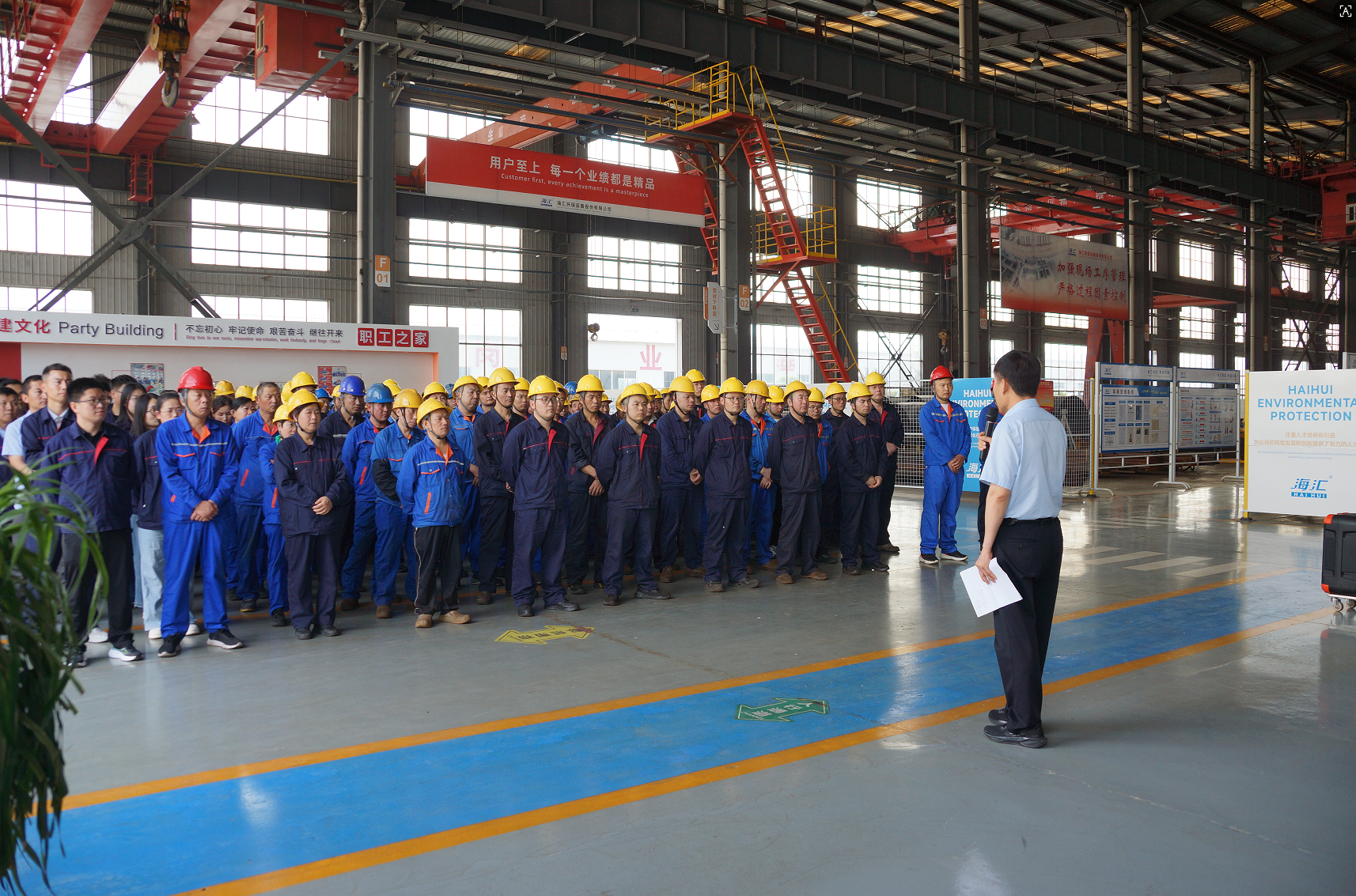
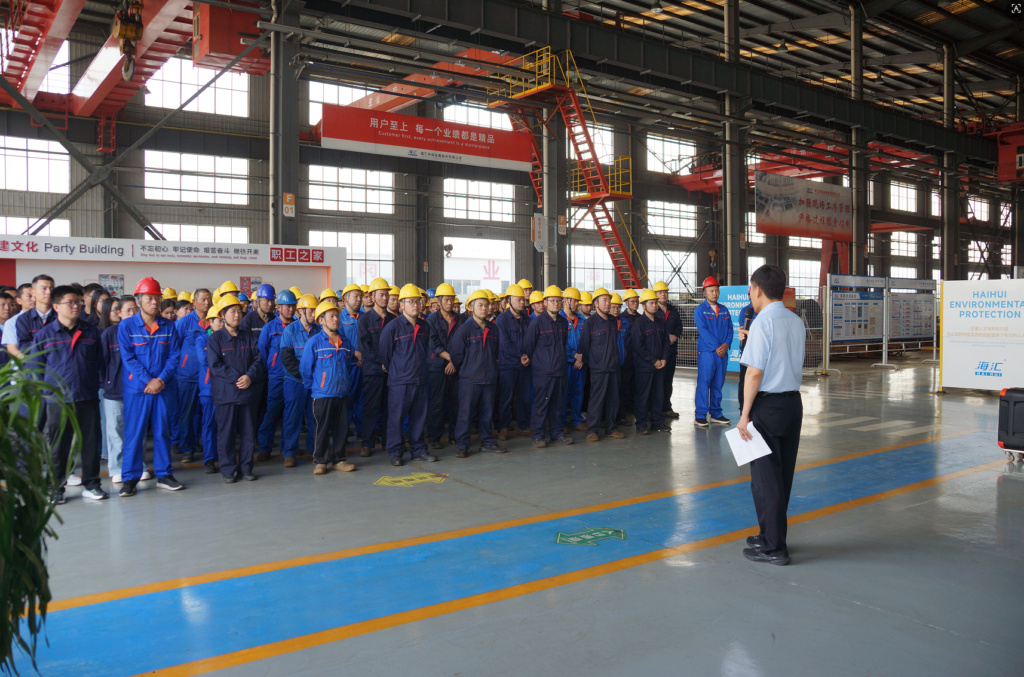
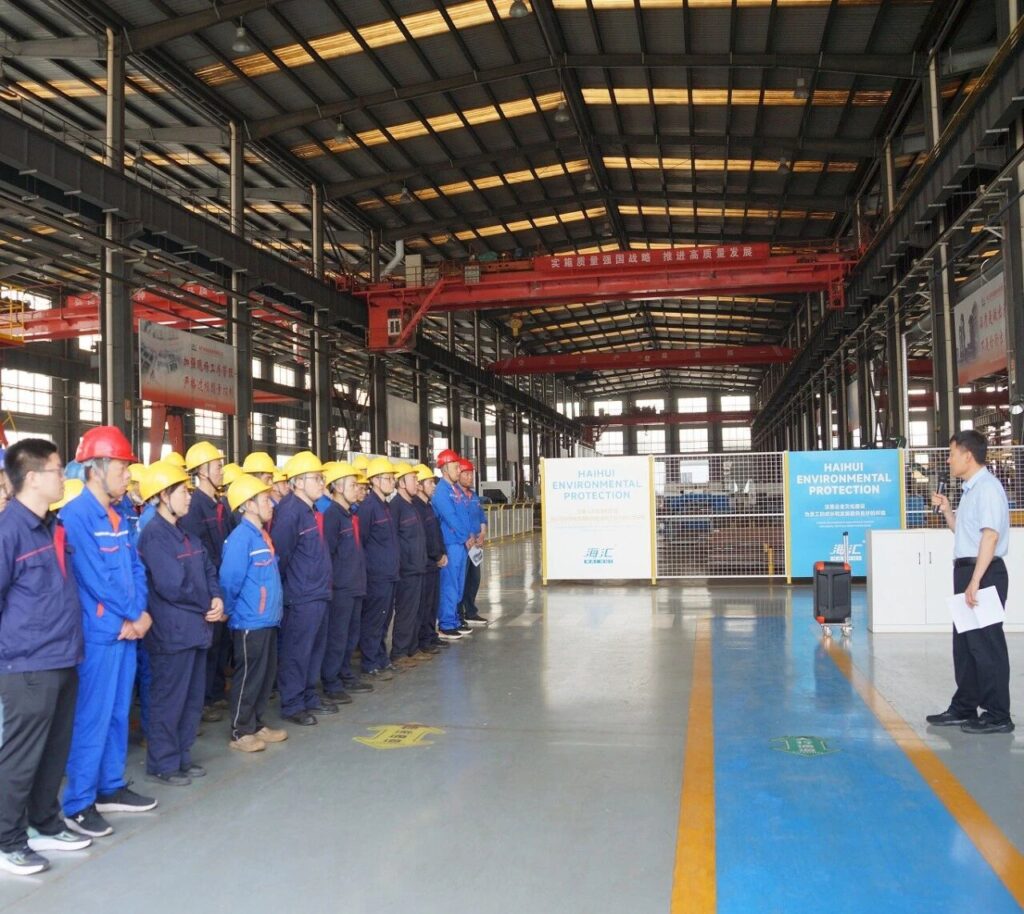
June this year marks the 25th National ‘Work Safety Month’. On 31 May, Haihui Environmental Protection organised a launch ceremony for ‘Work Safety Month’. The theme of this year’s campaign is ‘Everyone Prioritises Safety, Everyone Knows How to Respond to Emergencies’. Through this initiative, Haihui Environmental Protection aims to further strengthen safety management, enhance staff safety awareness and foster a positive culture of workplace safety.
Part One: Key Highlights of the Launch Ceremony
Explanation of the Activity Plan
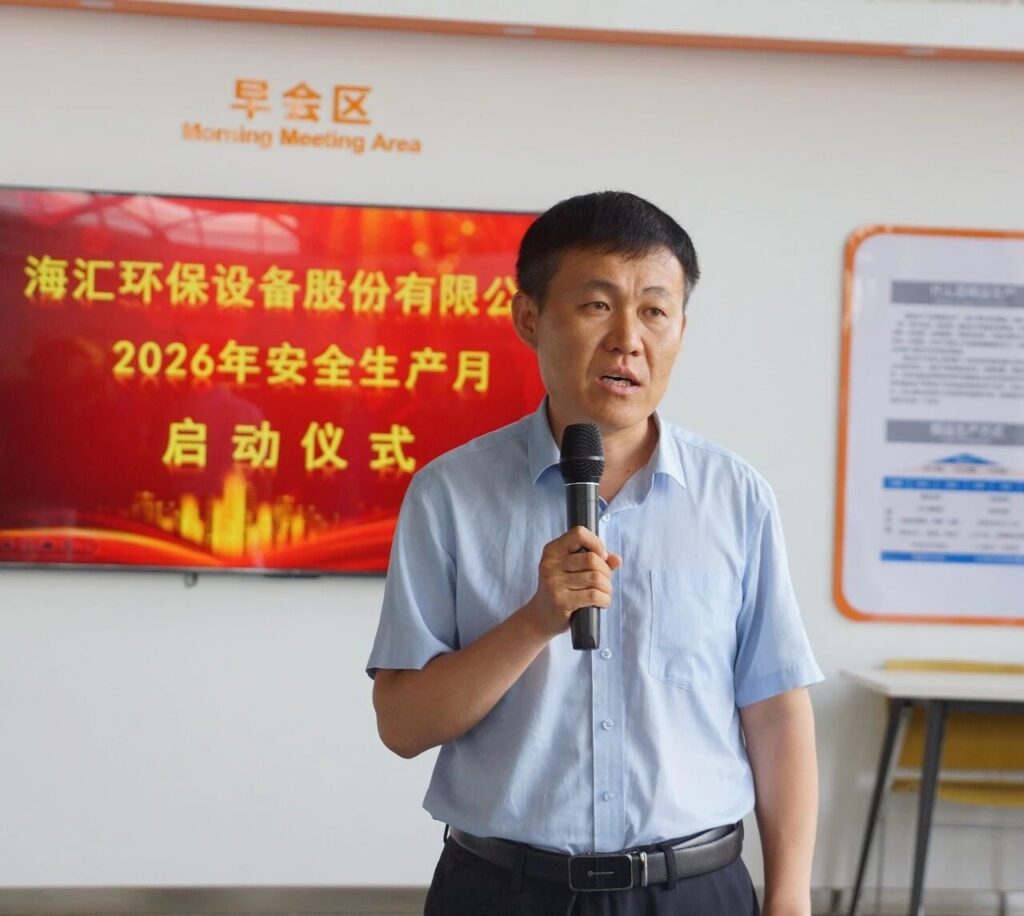
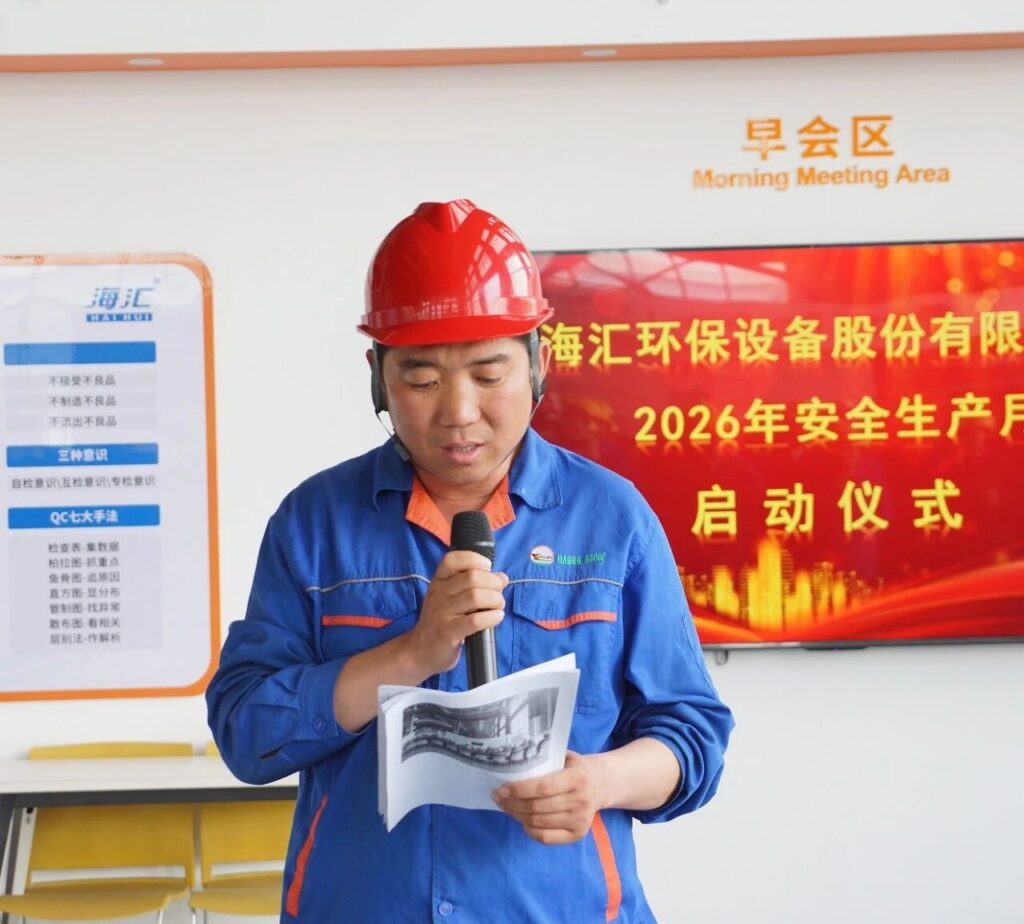
At the launch ceremony, the company’s Production Manager provided a detailed explanation of the six key components of this year’s Work Safety Month activities. The activities primarily include:
Promotion of work safety knowledge
Viewing work safety awareness and education videos
Identifying potential hazards in the workplace
Conducting comprehensive emergency drills
Work safety knowledge competitions, etc.
The company’s General Manager outlined specific requirements in line with the campaign plan.
Part Two: Eight Work Requirements
Requirement 1: Focus on key areas and conduct a comprehensive hazard inspection
The company requires close monitoring of six high-risk areas:
| No. | High-Risk Activity |
|---|---|
| 1 | Welding |
| 2 | Machining |
| 3 | Spray painting |
| 4 | Dust explosion hazards |
| 5 | Lifting operations |
| 6 | Engineering installation |
Specific measures include:
Conducting comprehensive, full-coverage hazard inspections
Strictly enforcing requirements regarding equipment protection, explosion-proof and dust control measures, lifting regulations, and fall protection
Maintaining a register of all hazards, ensuring rectification within specified timeframes, and closing out completed items
Immediately suspending work to rectify major hazards, thereby achieving dynamic risk elimination
Requirement 2: Strengthen practical drills to enhance emergency response capabilities
The company requires practical emergency drills to be conducted focusing on the following key risks:
Fire
Dust explosion
Electrical shock
Lifting-related injuries
Confined space rescue
Objective: To ensure all employees are proficient in skills such as raising the alarm, evacuation, initial firefighting, emergency rescue and personal protection. Following drills, a timely debriefing and review must be conducted to optimise contingency plans, ensuring employees can self-rescue in hazardous situations and respond effectively in emergencies.
Requirement 3: Deepen safety training and reinforce job responsibilities
Conduct comprehensive safety training for all staff organised by job role, covering the following content:
Operating procedures
Risk identification
Hidden hazard inspection
Essential knowledge and skills
Prioritise specialised training for the following personnel:
Specialised operators
New employees
Employees changing roles
Contract workers
Strictly enforce the requirement for certified personnel and the principle of ‘training before deployment’. Reinforce safety awareness through pre-shift briefings and case study videos, using assessments to encourage learning, ensuring that everyone understands and adheres to safety protocols.
Requirement 4: Diversify activities to foster a safety-conscious culture
Organise a variety of activities tailored to the company’s specific circumstances:
Safety knowledge competitions
Snap and report hazards
Safety improvement suggestions
By adopting an educational yet entertaining approach, we will stimulate active participation across the entire workforce, fostering a strong culture where ‘everyone discusses safety, everyone prioritises safety, and everyone takes responsibility for safety’, thereby uniting our collective efforts towards safety.
Requirement 5: Ensure full participation and reinforce individual accountability
Uphold the principle of collective responsibility and participation in safety:
| Role | Responsibilities |
|---|---|
| Department and workshop heads | Fulfill the role of primary responsible persons, personally deploy and inspect safety work |
| Team leaders and safety officers | Conduct on-site supervision, strictly check violations, and correct unsafe practices |
| All employees | Eliminate the “three violations” (violations of rules and regulations, illegal operations, and failure to fulfill safety duties), proactively identify and report hazards |
Establish a safety accountability system characterised by multi-tiered responsibility, where everyone is accountable and each individual fulfils their specific duties.
Requirement 6: Expand the scope of safety measures and ensure rigorous implementation of transport and canteen safety
Extend safety management to key scenarios beyond production:
Road safety: Strengthen education on road safety during commutes; strictly prohibit drink-driving, speeding, riding without a helmet and driving whilst fatigued; and standardise the management of vehicles used for off-site work
Canteen Safety: Strictly implement food procurement, processing and disinfection protocols; strengthen controls over electricity, gas and fire safety; and rigorously prevent food safety and fire incidents.
Requirement 7: Strictly manage subcontractors and site operations to uphold the minimum standards of construction safety
Integrate subcontractor teams and temporary labourers into the company’s safety management system:
Strictly enforce pre-entry safety training, risk briefings and the requirement for personnel to pass assessments before commencing work.
Strengthen supervision and inspection throughout the entire construction process; rigorously investigate violations of operating procedures, inadequate protective measures and unlicensed operations.
Implement safety briefings, daily inspections and rectification of potential hazards at project sites.
Ensure that engineering installation is carried out in a standardised and orderly manner, with risks kept under control.
Requirement 8: Strengthen supervision and accountability to ensure effective implementation
The safety management department shall intensify supervision and inspection efforts, and strictly hold departments and individuals accountable for failure to fulfil responsibilities, inadequate implementation of measures, and ineffective rectification of hazards.
Take the ‘Work Safety Month’ campaign as an opportunity to promote the normalisation, institutionalisation and standardisation of safety work, and ensure the company’s high-quality, stable and sustainable development through a high level of safety.
Part Three: Arrangements for the eight specific activities this month
| No. | Activity Name | Main Content |
|---|---|---|
| 1 | Safety knowledge promotion | Promote safety concepts and exemplary practices using blackboards, bulletin boards, WeChat groups, digital platforms, etc. |
| 2 | Accident case discussion meeting | Watch safety警示教育 videos such as “The Red Line” and conduct discussions based on workplace incidents |
| 3 | Online safety knowledge competition | Organized jointly with the labor union, Youth League branch, and Women Workers’ Committee |
| 4 | Safety knowledge learning and examination | Organize training and assessment on the “Work Safety Law”, operating procedures, and essential safety knowledge |
| 5 | Hazard identification activity | Encourage employees to propose corrective solutions; award good suggestions |
| 6 | Safety hazard inspection activity | Conduct comprehensive inspections of paint depots, spray painting booths, special equipment, and third-party contractor operations |
| 7 | Comprehensive emergency drill | Organize emergency rescue drills in accordance with emergency response procedures |
| 8 | “Violation-Free” campaign | Select violation-free teams and violation-free employees as criteria for monthly advanced team recognition |
Haihui Environmental Protection Continues to Strengthen Its Safety Defences
Haihui Environmental Protection has always placed workplace safety at the forefront of all its operations. The company employs a variety of methods to enhance employees’ safety skills and awareness, fostering a culture of full participation. Moving forward, Haihui Environmental Protection will continue to firmly uphold the principles of people-centred development and safety-first operations, strengthen measures to prevent workplace accidents, and implement source-based management, early intervention and proactive prevention, thereby ensuring the company’s safety situation remains stable and secure.