Limestone/lime–gypsum desulphurisation process
Product Details

I. Technical Principles

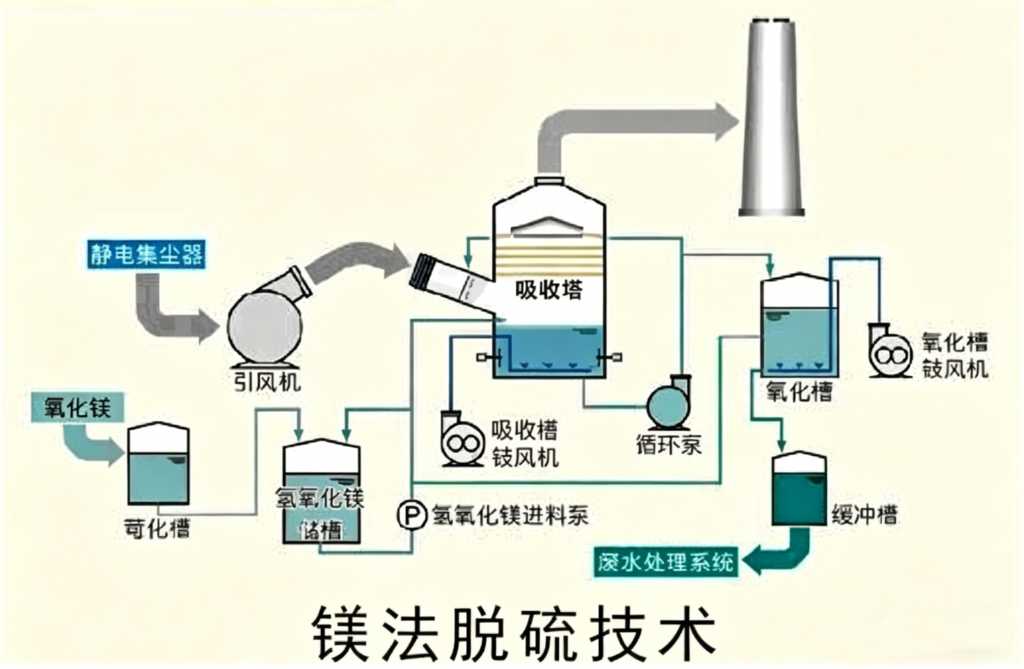
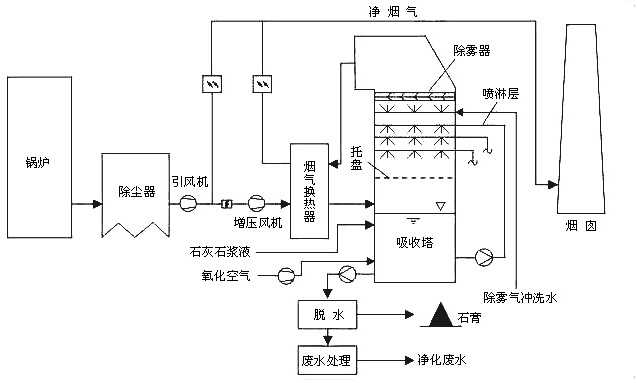
Flue gas enters the wet absorption tower of the desulphurisation unit, where it comes into counter-current contact with droplets of alkaline limestone slurry sprayed from top to bottom. The acidic oxide SO₂ and other pollutants, such as HCl and HF, are absorbed, thereby purifying the flue gas; Following the absorption of SO₂, the slurry reacts to form CaSO₃, which undergoes forced oxidation and crystallisation on-site to produce CaSO₄·2H₂O. After dehydration, this yields a commercial-grade by-product of desulphurisation—gypsum—thereby achieving comprehensive treatment of sulphur-containing flue gas.

II. Technical Features

(1) Wide range of suitable absorbents: A variety of absorbents can be used in FGD units, including limestone, lime, magnesite and spent soda solution;

(2) Wide range of suitable fuels: Suitable for flue gas treatment in boilers burning fuels such as coal, heavy oil, ory oil and petroleum coke;

(3) Strong adaptability to variations in fuel sulphur content: Capable of treating flue gas with fuel sulphur content as high as 8%;

(4) Strong adaptability to variations in unit load: Capable of ensuring stable operation across a unit load range of 15% to 99%;

(5) High desulphurisation efficiency: Generally greater than 95%;

⑹ Patented tray technology: Effectively reduces the liquid-to-gas ratio, promotes uniform gas distribution within the tower, reduces material and energy consumption, and facilitates maintenance of internal tower components;
⑺ High absorbent utilisation: Calcium-to-sulphur ratio as low as 1.02–1.03;
⑻ High purity of by-products: Capable of producing commercial-grade gypsum with a purity of over 95%;

⑼ High dust removal efficiency for flue gas from coal-fired boilers: 80%–90%;

⑽ Cross-flow spray pipe arrangement technology: helps reduce the height of the absorption tower.

III. Scope of Application

⑴ Medium-to-large new or retrofitted units of 200 MW and above;

⑵ Coal with a sulphur content of 0.5–5% or higher;

⑶ Required desulphurisation efficiency of 95% or higher;

⑷ Regions with abundant limestone resources and widespread comprehensive utilisation of gypsum.
Related Products

Dry desulphurisation technology

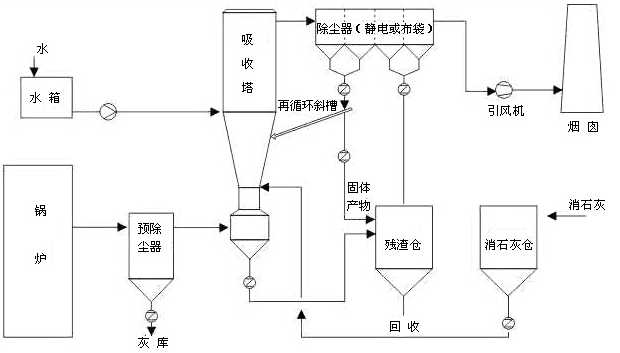
Dry desulphurisation technology Product Details I. Overview The Recirculating Circulating Fluidised Bed Flue Gas Desulphurisation (RCFB-FGD) process is an advanced dry flue gas desulphurisation process based on the principles of circulating fluidised bed technology. This process utilises dry slaked lime powder (Ca(OH)₂) as the absorbent. Through multiple recirculations of the dry powdered absorbent, it comes…

Magnesium-based desulphurisation technology

Magnesium-based desulphurisation technology Product Details The desulphurisation mechanism of magnesium oxide is similar to that of calcium oxide: in both cases, the alkaline oxide reacts with water to form a hydroxide, which then undergoes an acid-base neutralisation reaction with the sulphurous acid solution formed when sulphur dioxide dissolves in water. The reaction of magnesium oxide…

Desulphurisation and Dust Removal Unit (HNT Series Integrated Dust Removal and Desulphurisation Equipment)

Desulphurisation and Dust Removal Unit (HNT Series Integrated Dust Removal and Desulphurisation Equipment) Product Details Introduction to the HNT Series Desulphurisation and Dust Removal Unit: The HNT Series Integrated Dust Removal and Desulphurisation Equipment (Desulphurisation and Dust Removal Unit) is an environmental protection device that combines dust removal with the purification of harmful gases. Designed…

Ammonia-based desulphurisation technology

Ammonia-based desulphurisation technology Product Details I. Overview The ammonia desulphurisation process utilises liquid ammonia or ammonia water to remove SO₂ from flue gas, whilst simultaneously producing high-quality ammonium sulphate [(NH₄)₂SO₄]. This technology is particularly well-suited for the removal of SO₂ from flue gases in large-scale thermal power generation units and chemical plants that burn low-cost,…

Double-alkali desulphurisation process

Double-alkali desulphurisation process Product Details Overview of the Double-Alkali Desulphurisation Process The calcium-sodium double-alkali process involves first using a sodium-based alkaline absorbent solution to desulphurise flue gas, followed by the regeneration of the desulphurisation solution using lime powder. As the entire reaction takes place in the liquid-gas phase, this process avoids scaling issues within the…