Dry desulphurisation technology
Product Details
I. Overview
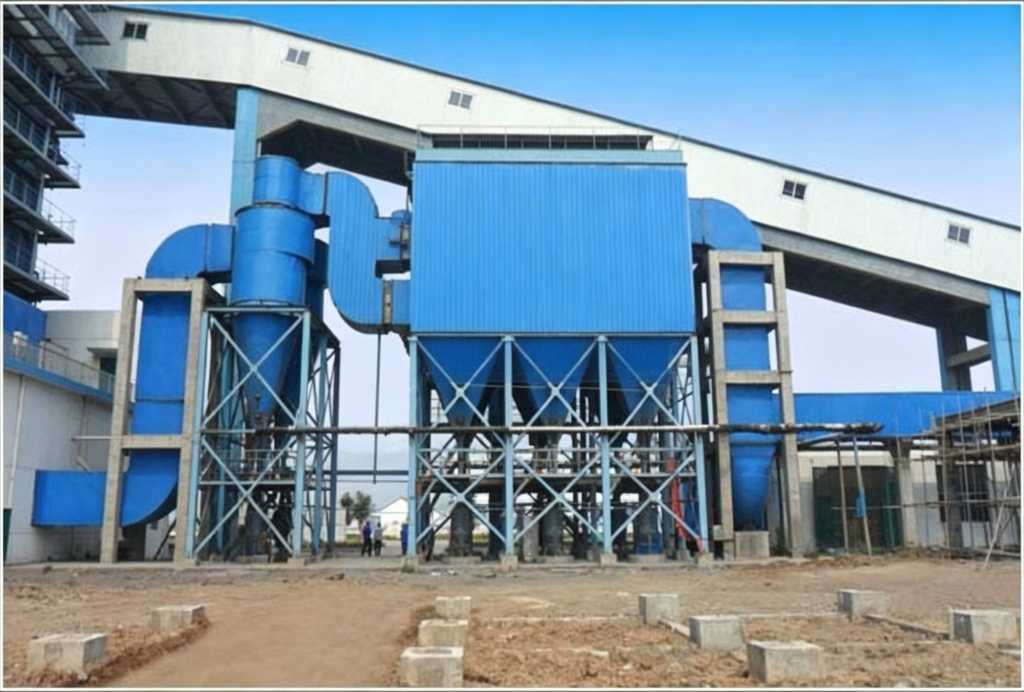
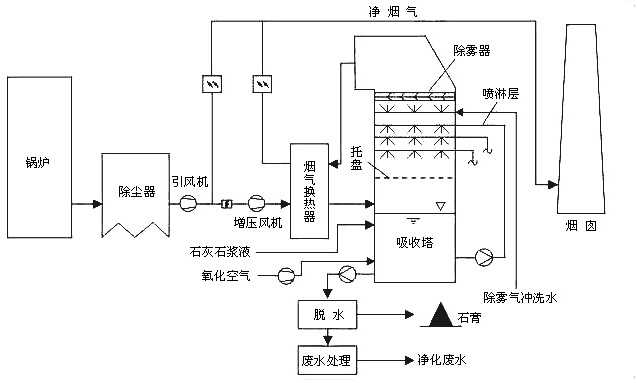
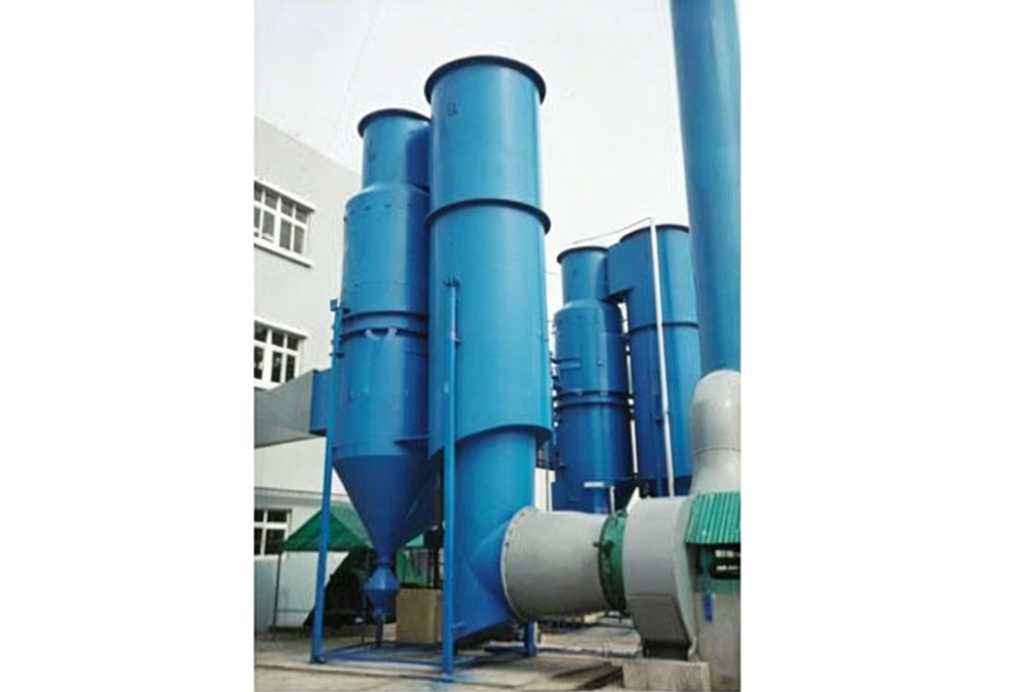
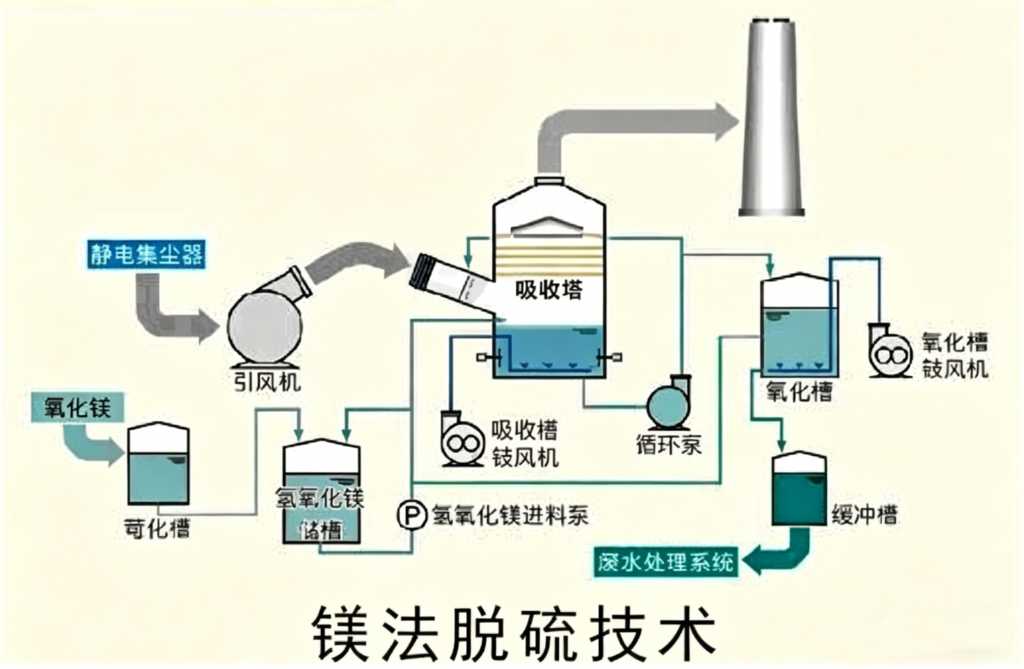
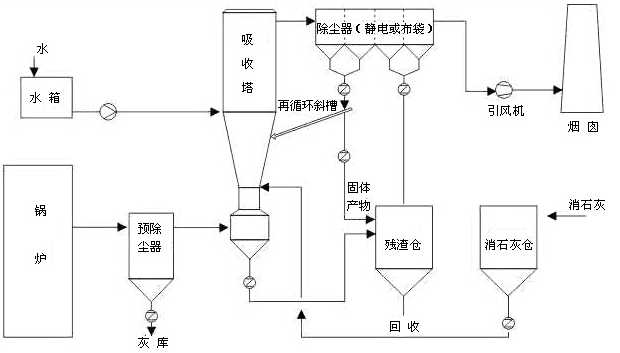
The Recirculating Circulating Fluidised Bed Flue Gas Desulphurisation (RCFB-FGD) process is an advanced dry flue gas desulphurisation process based on the principles of circulating fluidised bed technology. This process utilises dry slaked lime powder (Ca(OH)₂) as the absorbent. Through multiple recirculations of the dry powdered absorbent, it comes into intense contact with flue gas pollutants within the absorption tower, triggering chemical reactions and prolonging the contact time between the absorbent and the flue gas to achieve desulphurisation. Through these chemical reactions, SO₂, SO₃, HF and HCl can be effectively removed from the flue gas. The final desulphurisation product, desulphurisation slag, is a free-flowing dry powder mixture that causes no secondary pollution and can be further utilised. This process is primarily used for flue gas desulphurisation in power station boilers. A single tower can handle flue gas volumes suitable for boilers in units ranging from 6 MW to 330 MW. The SO₂ removal rate can reach 90% to 98%, whilst the removal rates for SO₃, HF and HCl are generally above 99%.
II. Technical Features of the Dry Desulphurisation Process
⑴. The flue gas reacts with the desulphurisation agent within the absorption tower; the long residence time ensures high utilisation of the absorbent;
⑵. There are no moving parts or wear-prone components within the absorption tower, resulting in high overall plant availability;
(3) Both the desulphurisation agent and the desulphurisation residue are in dry form, preventing adhesion, blockages and corrosion within the system equipment;
(4) When the sulphur content of the coal increases or higher desulphurisation efficiency is required, this can be achieved simply by increasing the amount of desulphurisation agent, without the need for additional equipment;
(5) The SO₃ removal rate is very high, and the flue gas dew point after desulphurisation is low, eliminating the need for anti-corrosion treatment of equipment and flue ducts;
⑹ The desulphurisation system has a wide load adaptability range, covering 30% to 110% of boiler load.
III. Advantages of Dry Desulphurisation Process Technology
⑴ SO₂ removal efficiency reaches 90% to 99%
⑵ Removal efficiency of SO₃, HF and HCl exceeds 98%
⑶ The desulphurisation system is simple, and the desulphurisation unit has a small footprint;
⑷ Low capital, operating and maintenance costs;
⑸ Low energy consumption of auxiliary systems;
⑹ No wastewater discharge;
⑺ No need for anti-corrosion treatment;
⑻ Low water consumption