Industrial Environmental Equipment Manufacturing: Complete Global Operations Guide
Mid-Year Business Growth and Operational Performance
During the second quarter, corporate contract volumes expanded by 73% year-over-year. Operating scales continue to grow across core industrial sectors, including intelligent conveying systems, dust collection technology, and industrial wastewater treatment. Key regional projects in domestic markets have entered critical installation phases, while overseas export orders maintain structured fulfillment timelines to ensure punctual site delivery.
Global Project Deployment and Sector-Specific Operations
On-site construction and installation processes are executing systematically across various regional zones:
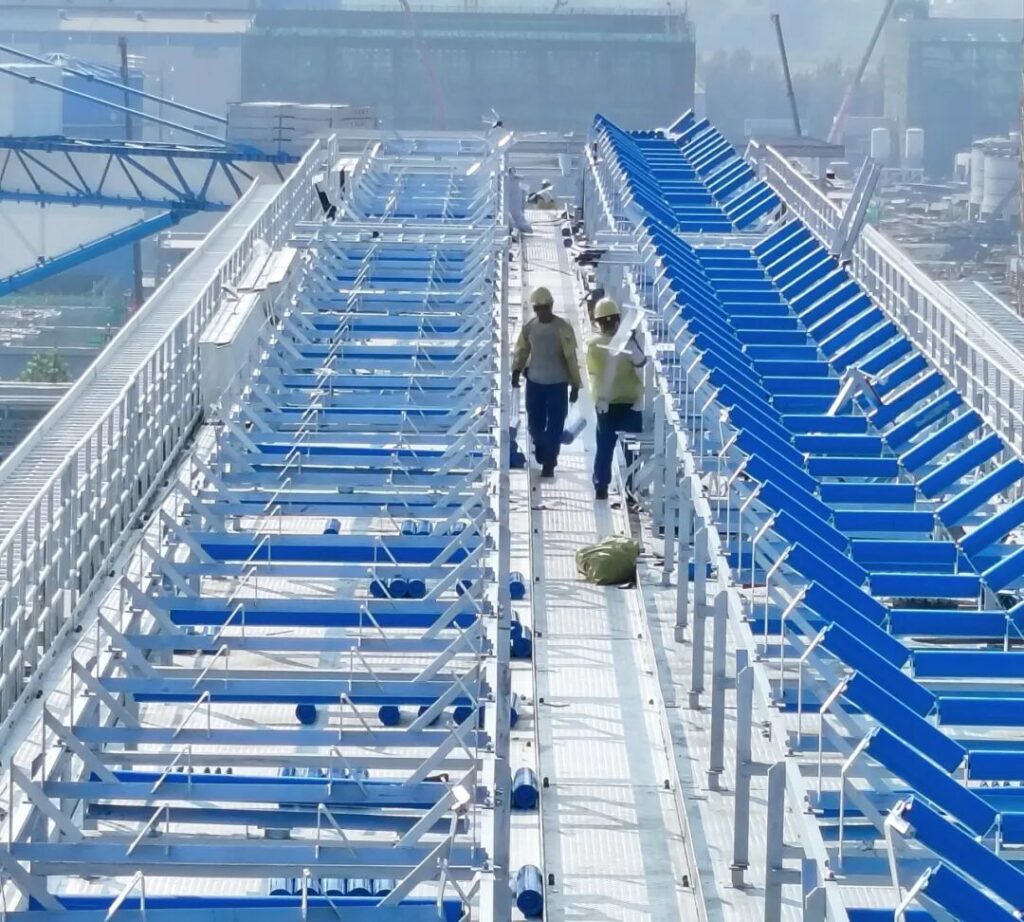
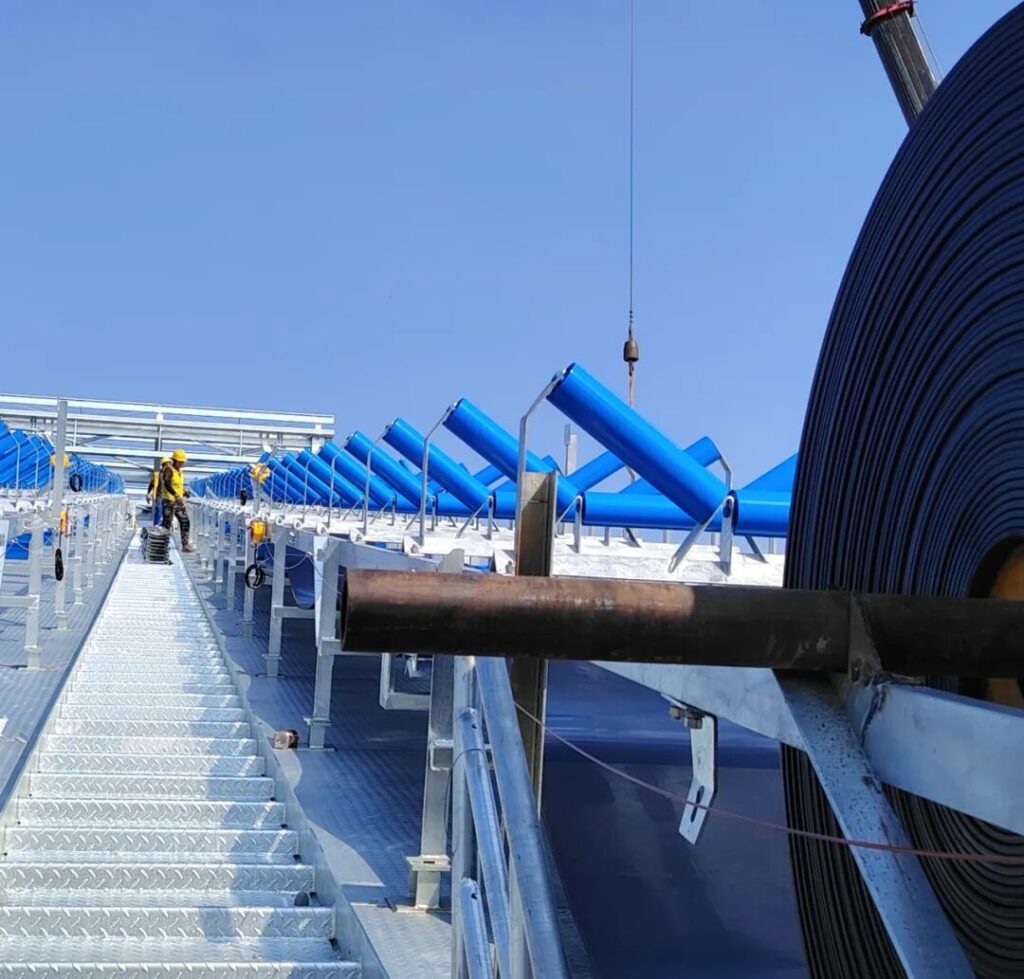
- Intelligent Conveying Systems: Implementation includes 72 belt conveyor lines across Beihai and Tianjin manufacturing facilities, alongside 45 units in Jining Yandian and Zoucheng bases. These customized material handling systems serve chemical processing and pulp/paper plants.
- Dust Collection and Emission Control: Key deployments cover ultra-low emission retrofits for steel plants in Linyi, integrated desulfurization and dust removal systems in Jiangsu, and routine environmental upgrades in Rizhao.
- Wastewater Treatment Systems: Critical process equipment installation is under way for the Decheng Chemical Industrial Park wastewater project in Dezhou.
- Global Fulfillment: Active project delivery continues across overseas regions including Australia, Canada, and Germany, complemented by domestic installations in Yantai, Tianjin, and Taiwan.
Market Expansion Strategy and Geographic Performance
Overall order growth stems from dual-track market execution across domestic and international industrial sectors.
| Market Region | Target Sectors / Core Focus | Growth Metrics & Achievements |
|---|---|---|
| Domestic Market | Steel, Paper, Chemical Processing, Mining | Closed-loop project management, steady market share expansion |
| International Market | North America, South America, Middle East | Entry into Canada, Brazil, Oman; export revenue increased nearly 4x |
Production Optimization and Lean Manufacturing Parameters
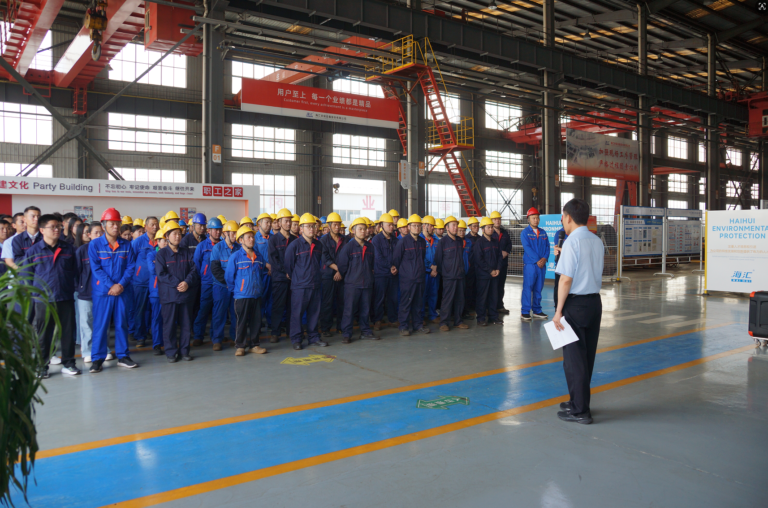
To handle elevated delivery requirements, manufacturing operations maintain full-capacity throughput. Facilities use a two-shift operational structure to bridge cutting, welding, assembly, and quality assurance processes. Operational performance indicators achieved during the last evaluation period include:
- Process Innovations: Implementation of 62 field-driven optimization proposals.
- Workflow Simplification: Removal of 21 redundant procedural steps.
- Core Efficiency Gain: 27% throughput rate increase across bottleneck manufacturing stations.
- Resource Management: Cost reduction achieved via structured procurement adjustments, overhead control, and scrap recycling streams.
Quantitative Engineering Parameters and Technical Baselines
1. Belt Conveyor Design Parameters
For heavy-duty bulk material handling systems, material throughput capacity (C) is evaluated using standard mechanical conveying formulas:
C = 3600 * A * V * rho * k
Where:
- C: Mass flow rate capacity (metric tons per hour)
- A: Cross-sectional load area of the conveyor belt (0.12 square meters)
- V: Nominal belt velocity (2.5 meters per second)
- rho: Bulk material density (1.4 metric tons per cubic meter)
- k: Inclination correction factor (0.95 for standard inclined transport)
Calculation example for nominal operational loading:
C = 3600 * 0.12 * 2.5 * 1.4 * 0.95 = 1436.4 metric tons per hour
2. Baghouse Dust Collector Air-to-Cloth Ratio
To maintain ultra-low particulate emissions in steel plants and chemical workshops, fabric filter systems operate under defined air-to-cloth ratios (filtering velocity):
- Volumetric Airflow Rate: 120,000 cubic meters per hour
- Target Filter Velocity: 0.8 meters per minute (0.0133 meters per second)
- Required Total Cloth Area: 2,500 square meters
- Differential Pressure Limit: System operating resistance maintained below 1,200 Pascals
3. Industrial Wastewater Treatment Hydraulic Retention Parameters
For chemical park wastewater treatment systems, tank volume sizing depends on minimum hydraulic retention time thresholds:
| Process Stage | Minimum Retention Time | Standard Target Metric |
|---|---|---|
| Primary Equalization | 8 hours | Peak flow smoothing |
| Anoxic Denitritation | 6 hours | Organic nitrogen breakdown |
| Aerobic Biological Oxidation | 18 hours | COD removal rating > 90% |
Technical References
- CEMA Standard No. 550 — Power Belt Conveyors. Conveyor Equipment Manufacturers Association. Calculation standards for bulk material conveying capacities.
- EPA-452/F-03-004 — Air Pollution Control Technology Fact Sheet: Fabric Filter – Pulse-Jet Cleaned Type. U.S. Environmental Protection Agency. Design guidelines for air-to-cloth ratios and filtration pressure drops.
- Metcalf & Eddy — Wastewater Engineering: Treatment and Resource Recovery (5th Edition). McGraw-Hill Education. Hydraulic retention times and biological reactor volume equations.

 English
 العربية
 Português do Brasil
 Русский
 Español