SNCR/SCR hybrid denitrification process
Product Details
Basic Principles
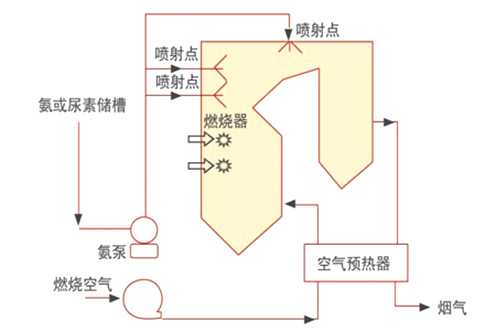
SNCR/SCR hybrid denitrification technology is an integrated process, rather than simply the combined use of SCR and SNCR processes. It is a novel, highly efficient and technically mature improvement on the SCR process, developed by building upon the SCR process and combining it with the cost-effective characteristics of SNCR technology.
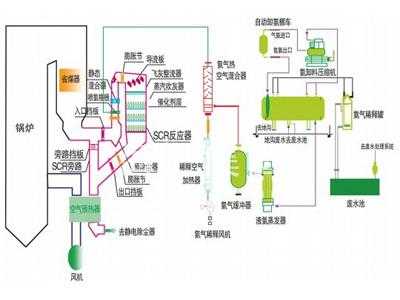
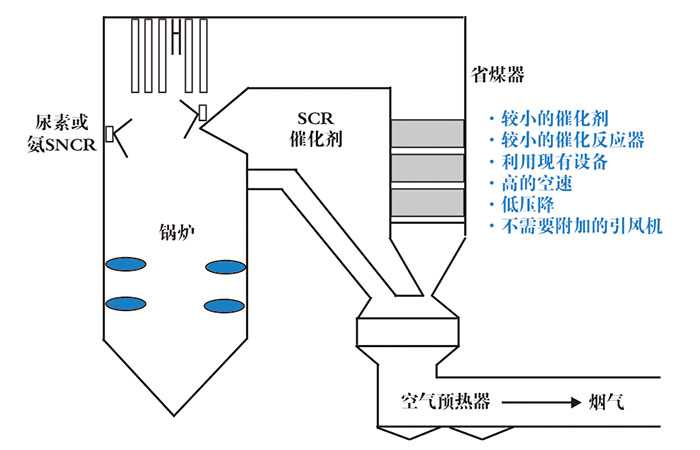
The SNCR/SCR hybrid method is based on a proven denitrification process and has a substantial track record in large-scale power station boilers. The front end of the process consists of an SNCR unit, which utilises a stable urea solution to reduce NOx within the boiler. A portion of the ammonia generated by the urea SNCR is carried along with the flue gas into the smaller SCR unit at the rear for further NOx reduction, thereby utilising the reactant and effectively controlling ammonia slip.
Another advantage of the SNCR/SCR hybrid process is that, as an SNCR system is already installed within the boiler, the NOx concentration at the SCR unit inlet is significantly reduced. This substantially decreases the quantity of catalyst required and the volume of the SCR reactor, whilst also eliminating the need for a complex air injection system (AIG). Consequently, it reduces the high capital costs of the SCR system and the constraints associated with the catalyst. It is therefore particularly suitable in the following circumstances:
Coal with high sulphur content, prone to forming ABS (NH₄HSO₃) deposits;
Coal with high ash content, prone to causing catalyst fouling;
Coal with high acid or alkali content, prone to causing catalyst deactivation;
Limited on-site space, unsuitable for installing large-volume catalysts;
Low load (e.g. reduced load at night) or frequent and rapid load fluctuations, which can lead to the formation of ABS (NH₄HSO₃) blockages;
The site requires extensive modification to accommodate large-volume catalysts;
Positive-pressure boilers require re-balancing of the boiler system;
No use of hazardous ammonia as a reactant.
SNCR + smaller-scale SCR = combined SNCR/SCR
SNCR/SCR Hybrid Process
Technical Features
High denitrification efficiency, with NOx removal rates exceeding 80–90%
Low catalyst consumption;
Minimal corrosion and ABS blockage issues caused by SO₂/SO₃ conversion;
Smaller than SCR reactors, offering better spatial adaptability;
Low system pressure drop;
No SCR bypass;
Minimal catalyst recovery;
Safe use of urea as a reducing agent;
Can be aligned with regulatory requirements and implemented in phases.
The SNCR/SCR hybrid method (SNCR/SCR hybrid denitrification process) not only offers significant space-saving advantages for retrofitting existing plants, but can also increase emission reductions for coal-fired power stations subject to stringent total NOx emission controls. Furthermore, for units with significant load fluctuations or peak-shaving units, it can mitigate the impact of sulphur on ABS blockage at low temperatures. Consequently, even after installing a full-scale SCR system, it is sometimes necessary to incorporate SNCR to form a hybrid system.