
Heavy Duty Conveyor Rollers: Fixed vs Movable Tracking Guide
- Heavy Duty Rollers for Conveyor at a Glance
- The Main Difference: Fixed Support or Active Correction
- What Material Conditions Change
- Fixed and Movable Heavy Duty Rollers Use Cases
- Compare Roller Types by Application
- Check Roller Optics Separately
- Installation Checks
- Choose the Heavy Duty Roller in Five Steps
- FAQ
- Does a self-aligning heavy duty roller require manual adjustment?
- Can a movable heavy duty roller support the belt while it adjusts?
- Does a self-aligning heavy duty roller require more maintenance than a fixed one?
- Does a heavy duty roller need different sealing for wet or abrasive conditions?
- Do you supply portable or light-duty conveyor rollers?
- References
Choose heavy duty rollers for conveyor systems when the belt path requires stable load support and controlled belt tracking. Choose training idlers or self-aligning rollers when the belt needs active correction to return to center. Both types are available with different diameters, bearing configurations, sealing levels, and surface treatments for different material conditions and environmental exposures.
This guide describes how to match roller selection to the site, starting with the material and the conveyor layout, then considering roller performance requirements and maintenance access.
Heavy Duty Rollers for Conveyor at a Glance
| Decision point | Fixed heavy duty roller | Movable / training heavy duty roller |
|---|---|---|
| Primary behavior | Supports the belt and load continuously | Adjusts its position or pivots to correct belt drift |
| Role on the conveyor | Maintains belt trough shape and reduces sag | Detects belt edge contact and steers the belt back toward center |
| Adjustment after installation | Normally none | May require periodic inspection and occasional repositioning |
| Mounting | Fixed bracket or frame, sometimes with slots for initial alignment | Pivoting frame, hinge mechanism, or edge roller assembly |
| Typical application | Long straight sections, loading zones, return runs | Sections prone to misalignment, curved or inclined segments, reversible conveyors |
These are typical operating roles, not guaranteed product specifications. Verify the diameter, wall thickness, bearing grade, and seal type on the exact model.
The Main Difference: Fixed Support or Active Correction
Fixed Heavy Duty Rollers for Continuous Support
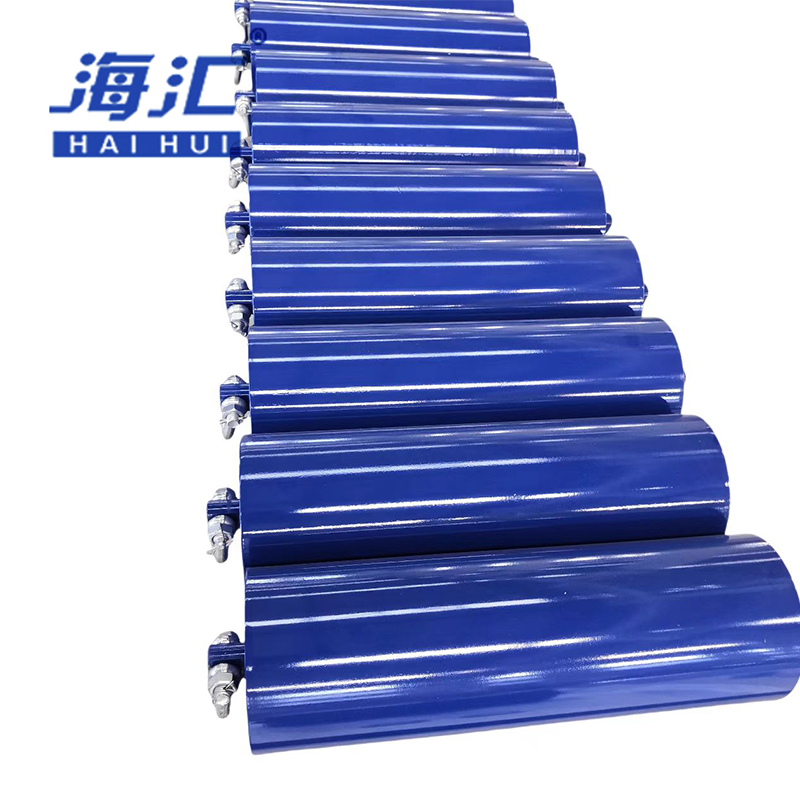
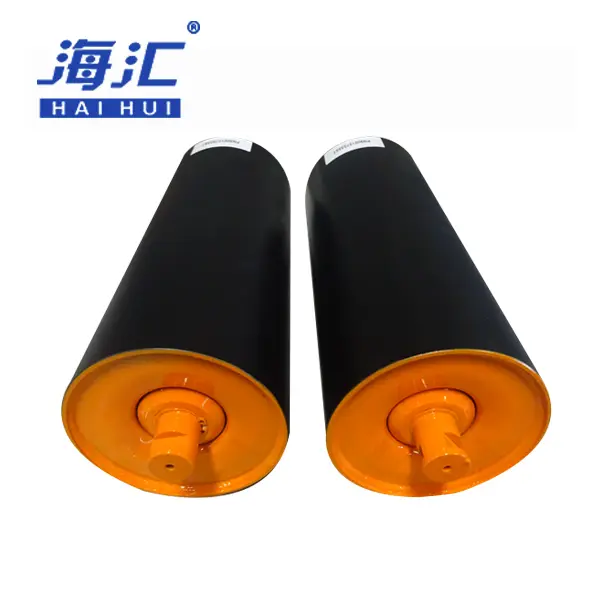
A fixed heavy duty roller uses a straight tube mounted in a stationary frame. During installation, the frame is leveled and squared to the conveyor centerline. The roller normally stays in that position during operation. This provides consistent support to the belt and the material it carries.
Fixed support does not mean the roller is unmaintained. Over time, material buildup or wear can change its effective diameter. The frame must stay square, and bearings must remain sealed to prevent contamination from dust, moisture, or chemical exposure.
Movable and Self-Aligning Heavy Duty Rollers
A movable heavy duty roller includes a pivoting frame, hinge mechanism, or edge roller arrangement. When the belt drifts, contact with the edge roller or the belt itself causes the frame to pivot. This changes the roller angle relative to the belt path, generating a lateral force that steers the belt back toward center.
This active correction is useful when the conveyor is long, the load is variable, or the belt tension changes frequently. However, the mechanism must remain free to move. Buildup or corrosion can lock the pivoting frame, reducing its corrective effect.
What Material Conditions Change
Abrasive and Impact Conditions
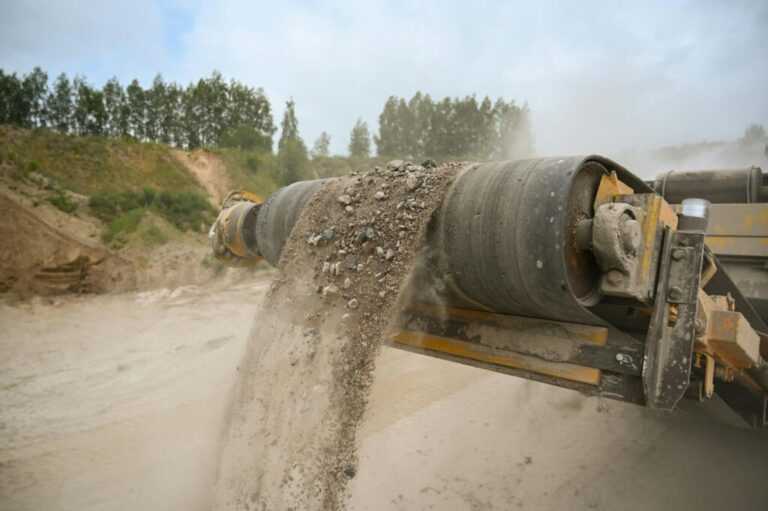
Material type affects roller wear. Heavy-duty rollers for conveyor systems can be exposed to sharp, hard, or heavy materials such as crushed ore, sinter, or cement clinker. In these conditions, the tube surface and seal system determine service life. Harder tube materials, thicker walls, and better sealing extend roller life.
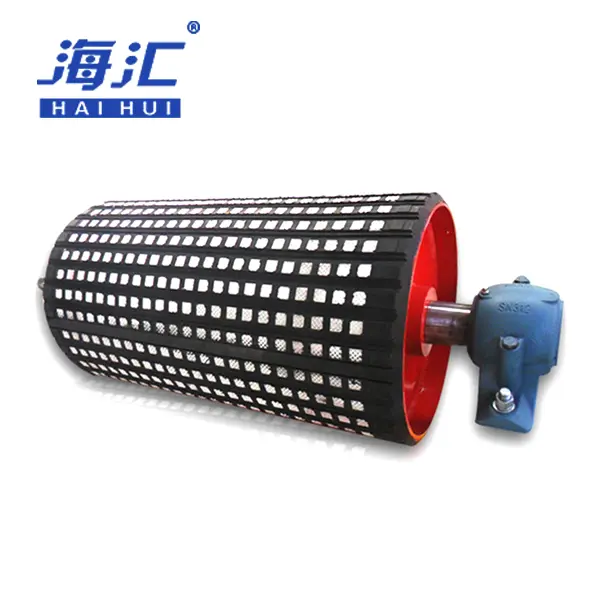
Abrasive dust can enter bearing cavities if sealing is inadequate. Ceramic or rubber coatings on the roller surface may be required in extreme wear conditions.
Wet and Sticky Materials
Wet materials can accumulate on roller surfaces. This buildup changes the effective diameter and can cause belt mistracking. For these conditions, self-cleaning or rubber-disc rollers reduce accumulation. Fixed rollers may require regular cleaning or scraper installations to remain effective.
High-Temperature Conditions
Hot materials, such as clinker or sinter, transfer heat to the roller surface. The bearing grease must remain stable at elevated temperatures, and the seal material must not degrade. Some heavy-duty rollers for conveyor applications are available with heat-stable greases and metal labyrinth seals.
Fixed and Movable Heavy Duty Rollers Use Cases
Fixed Heavy Duty Rollers for Straight Sections
Fixed rollers work well on straight, level conveyor sections where the belt path is stable and consistent. This arrangement is suitable for conveyors with well-maintained splice joints and consistent loading. Fixed support reduces sag, maintains trough shape, and lowers rolling resistance.
Self-Aligning Heavy Duty Rollers for Correction
Self-aligning heavy-duty rollers can correct belt drift before it causes edge damage or spillage. The roller frame pivots when it detects belt movement, steering the belt back. This role is useful at transfer points or before pulleys, but it should not be relied on to correct poor structural alignment.
Use Fixed and Movable Heavy Duty Rollers Together
Some sites require continuous support and periodic correction at the same time. Fixed heavy-duty rollers maintain belt path stability along the main length. Movable or self-aligning rollers are installed at intervals to address drift without relying on the fixed rollers to perform a job they are not designed for.
Compare Roller Types by Application
| Application | Fixed roller | Movable / self-aligning roller |
|---|---|---|
| Straight, stable conveying | Primary choice | Intermittent use if needed |
| Variable loading or tension | Works with adequate belt support | More suitable |
| Short or long conveyors | Works for both | More commonly used on longer conveyors |
| Reversible conveyors | Works if correctly aligned | Must handle both directions; check edge roller behavior |
| Wet or sticky materials | Works with self-cleaning or coating options | Works if movement remains free; check for buildup |
| Temperature extremes | Works with appropriate materials and greases | Works if mechanism remains operable |
Check Roller Optics Separately
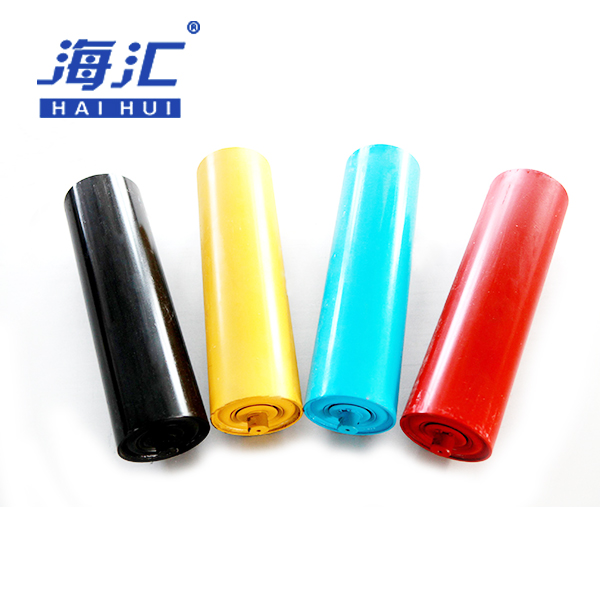
Do not assume that a similar appearance means similar performance. Heavy-duty rollers for conveyor applications can have different tube thicknesses, bearing sizes, seal configurations, and surface coatings. A model with a larger tube diameter does not necessarily have a larger shaft or higher load rating.
For a given belt width and load, a heavier tube wall provides more support and resists bending under load. A larger shaft improves bearing support. A multi-stage seal provides better dust and moisture resistance than a simple labyrinth seal.
Digital zoom is not mechanical. It enlarges image data but does not create new spatial detail. The same applies to roller data: changing the measured diameter does not change the tube stiffness.
Installation Checks
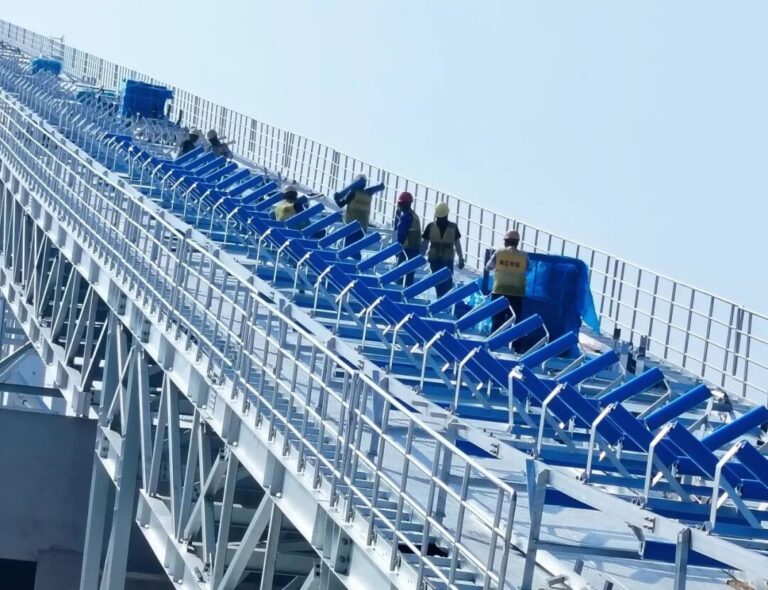
General mounting rules still apply, but heavy-duty roller installation adds a few extra things to watch for. Do not assume the frame is square. Measure it. Alignment marks on the frame help, but only if the frame is straight in both horizontal and vertical planes.
Alignment also matters. A roller that is not square to the belt line will steer the belt sideways. This effect becomes more noticeable at higher belt speeds and with stiffer belts.
The frame must support the roller without bending. At heavy loads, a flexible frame can reduce bearing life and cause tracking issues. Make sure the frame stiffness matches the roller load rating.
Access for cleaning matters more than you might think. Dust, salt, oil, and material spillage all reduce roller performance. Plan for regular cleaning and inspection, and make sure the roller is placed where you can safely reach it.
Choose the Heavy Duty Roller in Five Steps
- Define the application. State the material type, belt width, belt speed, and load capacity required.
- Determine the roller type. Use fixed heavy-duty rollers for continuous support. Use self-aligning or movable heavy-duty rollers for active belt tracking correction.
- Specify the tube, shaft, and bearing. Choose the tube diameter, wall thickness, shaft diameter, bearing grade, and seal type for the application.
- Check the frame and mounting. Verify frame stiffness, bracket dimensions, bolt patterns, and clearance for movement where required.
- Select the surface treatment. Choose paint, galvanization, stainless steel, or coatings that resist corrosion and wear.
FAQ
Does a self-aligning heavy duty roller require manual adjustment?
No. Self-aligning heavy-duty rollers for conveyor applications use belt contact to generate a corrective force. However, the pivoting mechanism must remain free to move. Build-up, corrosion, or mechanical damage can prevent correct operation.
Can a movable heavy duty roller support the belt while it adjusts?
Yes. The roller continues to support the belt while its frame pivots to correct tracking. The corrective action is continuous as long as the belt remains in contact with the roller.
Does a self-aligning heavy duty roller require more maintenance than a fixed one?
Yes, the pivoting frame has additional moving parts. Seals and pivot points must be inspected regularly to ensure the mechanism remains free and effective.
Does a heavy duty roller need different sealing for wet or abrasive conditions?
Yes. Sealing is application-specific. A dust-resistant seal differs from a moisture-resistant seal. Hot materials require heat-stable materials and grease.
Do you supply portable or light-duty conveyor rollers?
No. Haihui specializes in heavy-duty industrial conveyor rollers for fixed installations. We do not supply portable systems or light-duty conveyors used in warehouses or retail settings.
References
- Haihui internal test reports and field data (2020-2026)
- MT/T 821-2006 – Coal mine belt conveyor idler technical conditions
- DIN 22112 – Belt conveyors – Idlers – Dimensions and technical requirements
- CEMA Standard No. 502 – Bulk material belt conveyor idler selection
- GB/T 10595-2017 – Belt conveyors
- Bearing manufacturer technical data (HRB, ZWZ, SKF, NSK)
- Seal and grease specifications – Industry standard test methods
- Field service records from Haihui customer sites (2020-2026)

 English
 العربية
 Português do Brasil
 Русский
 Español